
 See Our Latest Article on HelloNation

What role can chiropractic care play in preventing sports injuries?
For residents of Goshen, NY, chiropractic care may be one part of a broader injury-prevention plan. Its most useful role is usually identifying and addressing musculoskeletal factors—such as restricted movement, joint stiffness, reduced strength, or poor movement control—that may affect how an athlete runs, lifts, lands, throws, or changes direction.
Chiropractic care does not make an athlete injury-proof, and there is not strong evidence that routine spinal adjustments alone prevent sports injuries. Research reviews have found mixed evidence for chiropractic treatment as a stand-alone prevention strategy. Injury prevention is better understood as a combination of progressive training, strength work, recovery, sport technique, appropriate equipment, and attention to early symptoms. ([pmc.ncbi.nlm.nih.gov](https://pmc.ncbi.nlm.nih.gov/articles/PMC8558815/?utm_source=openai))
How might a chiropractor identify injury risks?
An evaluation may examine how the spine and extremity joints move, how the athlete balances, and whether certain motions produce pain or compensation. For example, an athlete whose ankle has limited mobility may turn the foot outward while squatting or landing. Someone with hip weakness may allow the knee to move inward during running or jumping.
These observations do not prove that an injury will occur. They help identify modifiable factors that can be addressed through mobility exercises, strengthening, movement retraining, activity changes, or referral to another healthcare professional when appropriate.
A useful evaluation may consider:
- Current training volume and recent changes in activity
- Previous sprains, strains, fractures, or joint injuries
- Range of motion in the spine, hips, shoulders, knees, and ankles
- Balance, coordination, and single-leg control
- Pain that appears during warm-ups, practice, work, or household activity
- Sleep, recovery time, footwear, playing surfaces, and technique
This broader history matters in a community where people may combine organized sports with running, cycling, recreational exercise, physically demanding work, or seasonal outdoor activities.
Can spinal adjustments improve athletic performance?
A spinal adjustment may help some people with certain musculoskeletal complaints, particularly back or neck pain, but improved athletic performance should not be assumed. Evidence summarized by the National Center for Complementary and Integrative Health suggests that spinal manipulation can provide modest relief for some forms of low-back pain, with results comparable to other non-drug approaches. That is different from proving that adjustments increase speed, strength, endurance, or sports performance in healthy athletes. ([nccih.nih.gov](https://www.nccih.nih.gov/health/spinal-manipulation-what-you-need-to-know?utm_source=openai))
If pain or stiffness is limiting normal movement, reducing those symptoms may help an athlete participate more comfortably in rehabilitation or training. The benefit is indirect: the athlete may move better because a painful restriction has improved, not because an adjustment automatically enhances physical ability.
Strength, conditioning, technique, and gradual exposure to sport-specific demands remain central.
What prevention strategies have stronger support?
Exercise-based injury-prevention programs have more direct support than passive treatment alone. Programs commonly include strength training, balance exercises, landing mechanics, agility, trunk and hip control, and sport-specific drills. Reviews have found that programs tailored to the activity can improve important physical qualities, while consistent participation is a major factor in whether prevention efforts work. ([pmc.ncbi.nlm.nih.gov](https://pmc.ncbi.nlm.nih.gov/articles/PMC6715272/?utm_source=openai))
A practical weekly plan may include:
- A gradual warm-up that raises body temperature and rehearses sport movements
- Strength work for the legs, hips, trunk, shoulders, or other areas used heavily in the activity
- Balance and coordination exercises, especially after an ankle or knee injury
- Technique practice for jumping, cutting, lifting, throwing, or repetitive overhead motion
- Rest or lower-intensity days between demanding sessions
- A gradual increase in duration, distance, resistance, or intensity
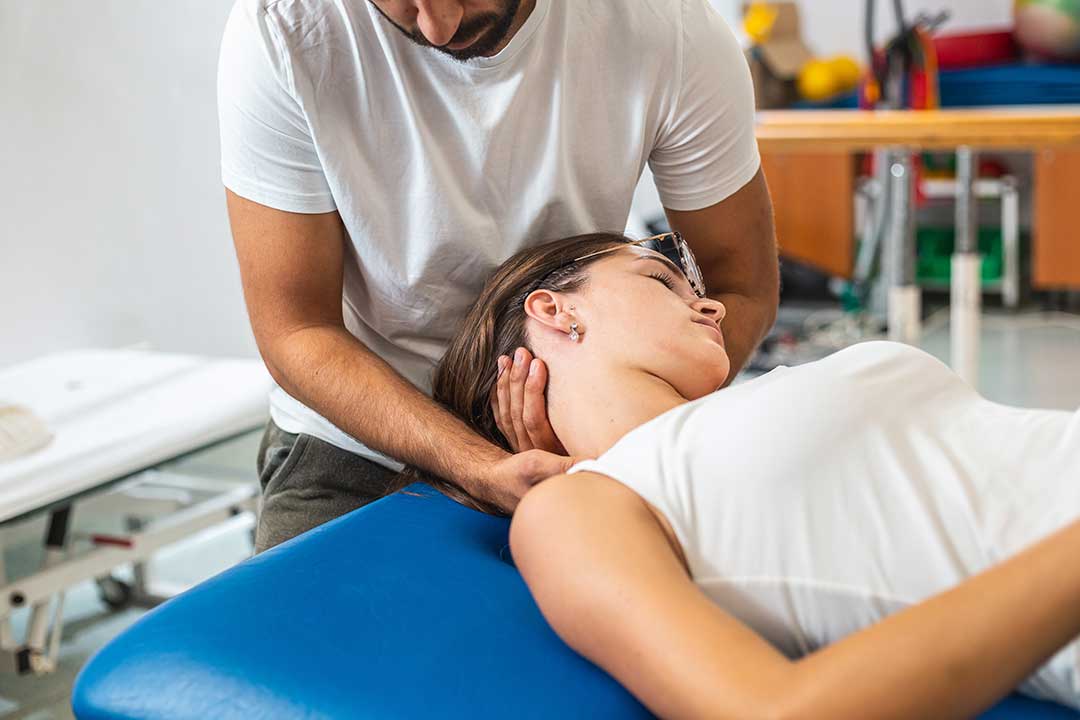
Static stretching can be useful for some mobility goals, but stretching by itself should not be treated as a complete injury-prevention program. The appropriate exercise depends on the sport, age, training history, medical conditions, and previous injuries.
How can chiropractic care fit with other sports healthcare?
Chiropractic care is most useful when it complements, rather than replaces, other parts of sports medicine. A coordinated plan may involve an athletic trainer, physical therapist, primary care clinician, orthopedic specialist, coach, or strength professional, depending on the problem.
For example, a chiropractor may help address joint mobility or pain while a physical therapist develops a progressive strengthening program. An athletic trainer may monitor practice participation and return-to-play steps. A physician may evaluate suspected fractures, significant ligament injuries, neurological symptoms, or conditions requiring imaging or medication.
The key question is not whether one profession can handle every sports problem. It is whether the athlete is receiving the appropriate assessment and rehabilitation for the specific injury.
When should an athlete avoid routine adjustment and seek medical evaluation?
Certain symptoms require prompt medical attention rather than routine musculoskeletal treatment. These include severe or worsening pain, inability to bear weight, visible deformity, major swelling, loss of strength, numbness, repeated vomiting, fainting, confusion, or symptoms after a significant blow to the head or neck.
A suspected concussion should be assessed by a healthcare provider. Athletes should not decide independently that they are ready to return to play. Current CDC guidance recommends a gradual, supervised return-to-sports progression after medical approval, with each step generally taking at least 24 hours. If symptoms return, the athlete should stop and contact the healthcare provider overseeing recovery. ([cdc.gov](https://www.cdc.gov/heads-up/guidelines/returning-to-sports.html?utm_source=openai))
Neck manipulation also deserves careful screening. Temporary soreness, stiffness, or headache can occur after spinal manipulation, while serious complications are rare but possible. A complete health history—including medications, vascular conditions, osteoporosis, recent trauma, neurological symptoms, and pregnancy—helps determine whether a technique is appropriate. ([nccih.nih.gov](https://www.nccih.nih.gov/health/spinal-manipulation-what-you-need-to-know?utm_source=openai))
What can local athletes do before the season starts?
Preseason preparation should begin before the first intense practice or competition. In colder months, muscles and joints may feel stiffer after time indoors or reduced activity. A longer gradual warm-up can be helpful before outdoor exercise, especially when the body is moving from rest into sprinting, jumping, or rapid changes of direction.
Before a season or new training cycle, athletes can review:
- Whether weekly workload has increased suddenly
- Whether old injuries still cause weakness or altered movement
- Whether shoes, protective equipment, or playing surfaces are appropriate
- Whether recovery includes adequate sleep, hydration, and lower-intensity days
- Whether pain is being ignored because of competition pressure
Chiropractic assessment may help identify movement or joint issues that deserve attention, but prevention works best as an ongoing process. The most reliable approach combines appropriate training progression, strength and coordination, early reporting of symptoms, and timely medical evaluation when an injury may be serious.
